Ragweed Allergy: Season, Symptoms and Treatment
- Ragweed season starts in August for most of the U.S. and ends with the first hard frost (AAFA, ACAAI).
- About 1 in 7 people in the U.S. are allergic to ragweed pollen (AAFA).
- A single ragweed plant can release up to 1 billion pollen grains (AAAAI).
- Bright yellow goldenrod usually isn't the problem. Its pollen is too heavy to blow in the wind (University of Illinois Extension).
- The ragweed allergy tablet has to be started at least 12 weeks before the season (FDA label via DailyMed).
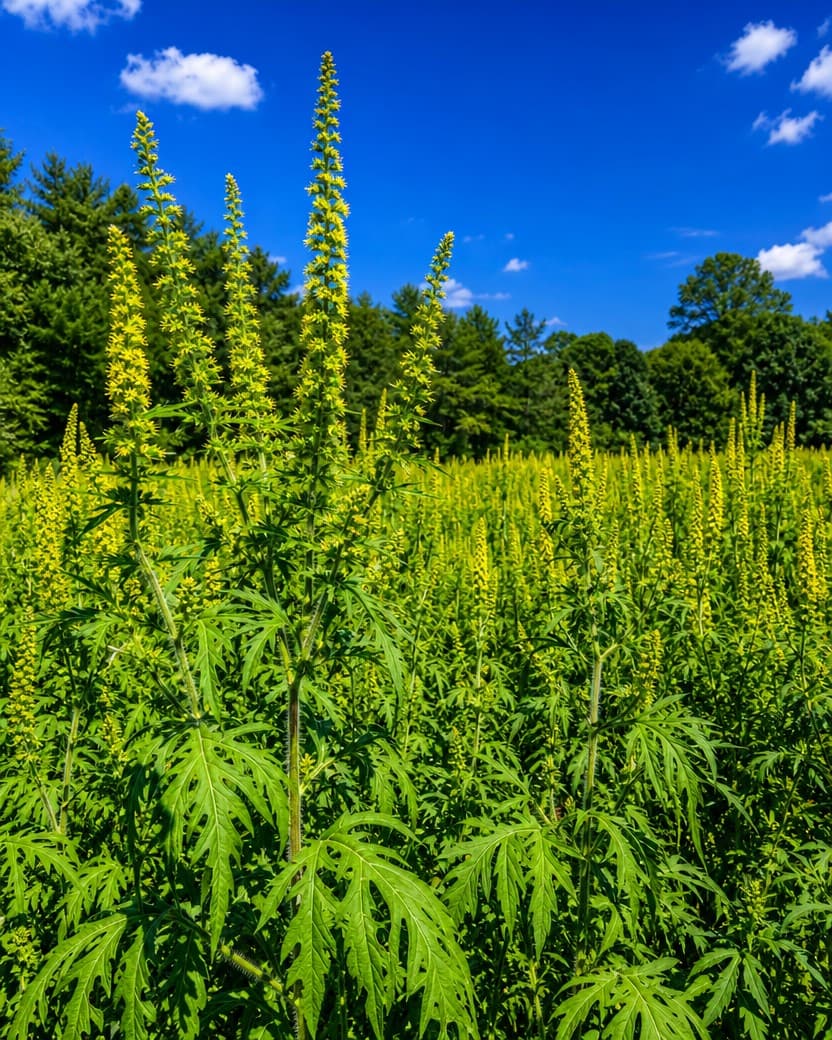
Ragweed allergy is a reaction to the pollen of ragweed, a plain green weed that grows in almost every U.S. state. For most of the country, ragweed season starts in August, peaks around mid September, and ends with the first hard frost. If you sneeze, itch and drip every fall, ragweed is the most likely reason. The Asthma and Allergy Foundation of America (AAFA) estimates that about 1 in 7 people in the U.S. are allergic to it.
Medicine can ease symptoms through the season. For longer relief, allergy shots, an under the tongue tablet and ILIT (intralymphatic immunotherapy) all work on the allergy itself. Each one has its own timeline, covered below.
When to get care right away
Ragweed usually causes hay fever, not an emergency. Two situations are different. The ACAAI notes that ragweed pollen can make asthma worse, with more coughing and wheezing. If you're struggling to breathe or your rescue inhaler isn't helping, get emergency care.
The second is food. Some people with ragweed allergy react to certain raw fruits (more on that below). The AAAAI says those reactions are usually mild and stay in the mouth. Throat swelling or trouble swallowing or breathing after eating is a different story. Call 911.
What ragweed is and why it causes so much trouble
Ragweed spreads its pollen by wind, not insects. That one fact explains most of its reputation. Wind pollinated plants make huge amounts of small, light pollen, and ragweed makes more than most. The American Academy of Allergy, Asthma & Immunology (AAAAI) says a single plant can release up to 1 billion grains.
That pollen travels. AAFA New England reports ragweed pollen measured 400 miles out at sea and two miles up in the atmosphere, though most grains land fairly close to the plant. So pulling the ragweed in your own yard won't protect you much.
There are at least 17 species in North America, according to the same AAFA New England page. The two you'll hear about most are common (or short) ragweed and giant ragweed.
Goldenrod usually isn't the allergy problem
Every fall, goldenrod takes the blame. It blooms at the same time, it's bright yellow, and it grows in the same fields and roadsides. But goldenrod relies on bees and other insects to move its pollen, which is too heavy to ride the wind, as University of Illinois Extension explains. Ragweed's flowers are small and green and easy to walk past without noticing.
When is ragweed season?
The core of the season is August through September almost everywhere, but the season can vary depending on where you live and weather patterns, and the major allergy groups describe it a little differently:
- Start: The AAFA says ragweed can start as early as July in some states, especially in the South. For most of the country, pollen shows up in August.
- Peak: The ACAAI and AAFA both put the peak around mid September.
- End: The AAAAI says the season used to run from mid August through September, and in many areas now stretches from early August through October. The ACAAI describes ragweed producing pollen from August into November.
What closes the season is cold. Ragweed stops releasing pollen at the first hard frost, and AAFA New England notes that levels are often low for weeks before that.
Ragweed grows across nearly all of the U.S. and Canada, according to the AAAAI, and is most common in the East and Midwest. It isn't only an eastern problem, though, as AAFA's latest city ranking shows.
The AAFA's top 10 cities with the greatest exposure to weed pollen
Each year the AAFA's Allergy Capitals report ranks the 100 most populated metro areas in the lower 48 states by how hard they are to live in with allergies. Based on its 2026 data, these 10 cities have the greatest exposure to weed pollen, listed with their main weed pollens:
- San Diego, CA: ragweed and sagebrush pollen
- Salt Lake City, UT: ragweed, sagebrush and mugwort pollen
- Ogden, UT: ragweed and mugwort pollen
- Spokane, WA: ragweed and mugwort pollen
- San Francisco, CA: ragweed pollen
- Knoxville, TN: ragweed pollen
- Raleigh, NC: ragweed pollen
- Provo, UT: ragweed, mugwort and sagebrush pollen
- Atlanta, GA: ragweed pollen
- Winston-Salem, NC: ragweed pollen
Ragweed shows up in all 10, from the Pacific coast to the Carolinas. In the Utah, Washington and Southern California cities, sagebrush and mugwort add to it. Both are in ragweed's plant family, and the AAFA notes they can cause similar reactions in people with ragweed allergy (more on that in the FAQs below).
Why ragweed season is getting longer
Warmer falls mean later frosts, and later frosts give ragweed more time. A 2011 study in PNAS, led by Lewis Ziska of the USDA's Agricultural Research Service, tracked ragweed pollen at 10 sites from Texas to Canada. Since 1995, the season had grown by as much as 13 to 27 days at the northern sites, and the farther north the site, the bigger the change. The lengthening was tied mainly to a later first frost in the fall.
Ragweed allergy symptoms
Ragweed allergy symptoms look like other hay fever. The ACAAI lists sneezing, a runny or stuffy nose, irritated eyes, an itchy throat and headaches. The AAFA's list for weed pollen allergy adds tiredness and disturbed sleep.
Itching is the clue. AAFA points out that itchy eyes, nose or ears separate allergies from a cold, which can otherwise feel very similar. Timing helps too. Symptoms that show up in mid August and fade after the first frost, year after year, point strongly toward ragweed.
Ragweed and food: banana, melon and zucchini
Some people with ragweed allergy notice an itchy mouth after eating certain raw fruits and vegetables. This is called oral allergy syndrome, or pollen food syndrome. Proteins in the food look enough like ragweed pollen proteins that the immune system reacts to both.
The AAAAI links ragweed with banana, cucumber, melon and zucchini. AAFA's list adds cantaloupe, watermelon and sunflower seeds.
Reactions usually mean itching or mild swelling of the lips, mouth or throat, right after eating. Cooking often helps because heat breaks down the proteins involved, the AAAAI says. Peeling may help too, since the protein tends to concentrate in the skin. Tell your allergist about any reaction to cooked produce or to nuts, or one that keeps getting worse.
How ragweed allergy is diagnosed
An allergist can confirm ragweed allergy with a skin test or a blood test. In a skin test, a small amount of diluted allergen goes on your skin, and the ACAAI says the result is read after about 15 minutes. A positive test matters for treatment, since immunotherapy is matched to the specific allergens you react to. Our guide to allergy skin tests vs. blood tests covers how the two compare.
How to cut your exposure
You can't avoid ragweed entirely during the season. You can lower the dose:
- Check the morning counts. Ragweed pollen is highest in the morning, according to the ACAAI. The AAAAI's National Allergy Bureau posts pollen and mold counts from stations around the country.
- Keep windows closed at home and in the car on high pollen days.
- Filter the air. AAFA suggests a certified filter in your heating and cooling system, or a portable air cleaner in the bedroom.
- Leave pollen at the door. Shower before bed and change out of clothes you wore outside. A pet that's been outdoors carries pollen in its coat, so wipe it down.
Treatment: allergy medicine first
Antihistamines and steroid nasal sprays are the usual first step, and they work best started early. AAFA recommends beginning daily medicine at least two weeks before pollen season starts. The ACAAI frames it as about two weeks before you expect symptoms at their worst. For ragweed, that means late July in much of the country.
Medicine controls symptoms while you take it. It doesn't change the allergy, so you'll be back on it next August.
Longer term options for ragweed allergy
Allergen immunotherapy trains your immune system to tolerate ragweed instead of reacting to it. The AAAAI says allergy shots and allergy tablets can significantly reduce how often symptoms show up and how bad they get. There are three forms to know about.
Allergy shots (SCIT) have the longest track record. The AAAAI describes a build-up phase of shots once or twice a week for four to six months, then maintenance shots every two to four weeks for three to five years. Our guide to allergy shots goes through what that looks like, and How Often Do You Get Allergy Shots? breaks down the visit count.
The ragweed tablet (SLIT) dissolves under the tongue once a day at home. The FDA approved one, Ragwitek, for ages 5 through 65. Its label says to start at least 12 weeks before ragweed season and keep taking it through the season. The first dose is taken in a doctor's office with at least 30 minutes of observation, and you'll get a prescription for an epinephrine auto injector (e.g., EpiPen®) to keep on hand. Twelve weeks before an August season puts the start in mid May to get ahead of the ragweed allergy season.
ILIT (intralymphatic immunotherapy) is the shortest course of the three, and for some people a faster alternative to allergy shots. An allergist injects FDA approved allergen extract into a lymph node, usually near the groin, guided by ultrasound. Injecting it there is an off label use of the extract, and your doctor can help you understand the treatment method. A typical course is about three injections over about two months. The trial that established ILIT in 2008 used three injections four weeks apart.
Be clear on one point before you choose ILIT for ragweed. That trial studied grass pollen, and we couldn't find a published ILIT study for ragweed. The only one registered, a small 2017 safety trial, was stopped after enrolling two people when its sponsor withdrew its FDA application. If a practice offers ILIT for ragweed, ask how many ragweed patients they've treated and how those patients did. If ragweed is one of several allergies you have, that answer will help you and your doctor discuss which option makes the most sense.
The research on ILIT is promising but smaller than for allergy shots, and results vary from person to person. Our comparison of allergy shots, allergy drops and ILIT puts the three side by side, and the ILIT safety FAQ covers the FDA question in more detail. Ragweed is just one part of the year, too. See Seasonal Allergies by Season for what comes before and after it.
When you're ready to talk with someone who offers the faster allergy treatment, find an ILIT provider near you.
Frequently Asked Questions
The first hard frost stops ragweed from releasing pollen, but your symptoms may not stop the same day. The ACAAI suggests keeping up your allergy medicine for about two weeks after that first frost, because pollen can linger in the air.
It can. Besides the usual nose and eye symptoms, the AAAAI notes that ragweed can cause allergic contact dermatitis and hives in some people. Contact dermatitis is an itchy rash where your skin touched the plant, so gloves help if you're pulling ragweed out of a garden bed.
Several plants in the same family can cause similar reactions in people with ragweed allergy. The AAFA names sunflowers, sagebrush, mugwort, rabbit brush, burweed marsh elder and groundsel bush. If you live in the West, sagebrush and mugwort may add to your fall symptoms even where ragweed is less common.
For quick symptom relief, allergy medicine is the fastest option. Immunotherapy works slowly by design, retraining your immune system over months or years. The ragweed tablet's FDA label says plainly that it isn't meant for immediate relief. If you want a shorter course than years of shots, ask an allergist about ILIT, and ask how much ragweed experience they have with it.